The layers that decide quality
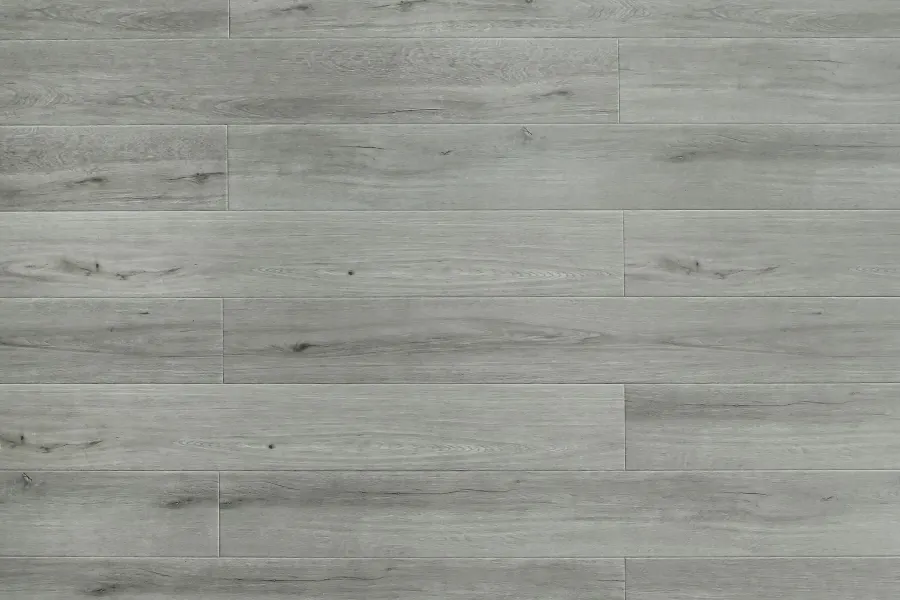
Not all luxury vinyl plank is the same, and the differences are in the layers. The wear layer on top is measured in mils (thousandths of an inch) and sets how well the floor resists scratches, scuffs and daily wear. We recommend at least 20 mil for a home; 12 mil can serve a low-traffic room. Families with children, large dogs or busy hallways should look higher still.
The core gives the plank its stability and decides whether it is rigid or flexible. A stone plastic composite (SPC) core is the most rigid and durable, which suits busy households and light commercial use. The backing layer, often IXPE foam, dampens sound and softens the step; when it is built into the plank, no separate underlay is needed.
Where luxury vinyl plank flooring works, room by room
| Room | Why LVP suits it | Watch for |
|---|---|---|
| Kitchen | Waterproof against spills, splashes and dishwasher leaks; no grout to stain | Wipe up hot oil or boiling water promptly |
| Bathroom | Waterproof like tile, but warmer underfoot and no grout to maintain | Seal the transitions and cut-outs at the toilet, vanity and tub |
| Basement | Waterproof and dimensionally stable where hardwood warps and carpet holds damp | A level, prepared concrete slab |
| Living room | Realistic grains and textures; wide planks suit open plans | Felt pads under heavy furniture |
| Bedroom | Quiet and comfortable with foam backing; easier to keep clean than carpet | Little to worry about |
| Entry and mudroom | Stands up to boots, grit, salt and melt water | Choose a thick wear layer and an SPC core |
| Home office | Looks professional on camera and resists chair casters | A clear chair mat at the desk |
Kitchens and bathrooms
The kitchen is one of the best uses for LVP. Hardwood can warp or stain from water, and ceramic tile with cement grout can discolour under a dropped pot of sauce. A waterproof plank, not merely a water resistant one, handles spills, splashes and the occasional dishwasher overflow and cleans up without a mark. Heat is the one caution: clean up boiling water or hot oil promptly, because prolonged contact can damage the surface.
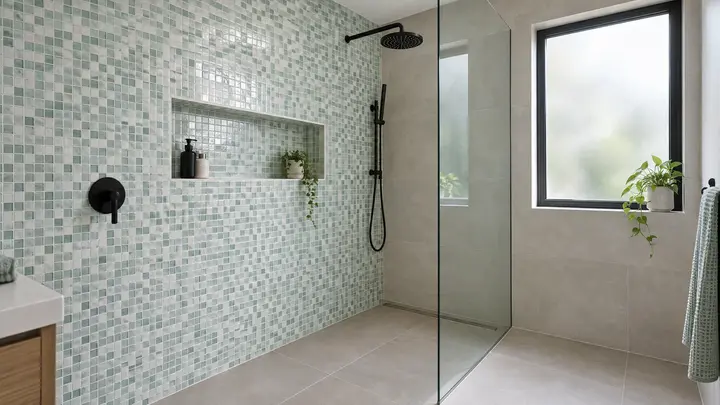
Bathrooms are humid and wet, so hardwood is out, and tile, while sound, is cold underfoot and needs grout upkeep. LVP sits between the two: the waterproofing you need with the warmth of a resilient floor, and in a 12 by 24 inch tile format it gives the look of stone or ceramic without the cold or the grout. The planks are waterproof; the job is to seal the transitions and the cut-outs around the toilet, vanity and tub so water never reaches the subfloor.
Basements
If LVP beats every alternative anywhere, it is below grade. Basements swing in humidity even when well waterproofed, which moves natural wood, and carpet is a gamble. A waterproof, stable plank suits family rooms, offices, gyms and guest suites, and an integrated foam underpad makes a concrete floor more comfortable to stand on for long stretches. Get the slab level first: LVP forgives more than tile, but real unevenness shows through in time and can open gaps at the joints.
Living rooms, bedrooms and offices
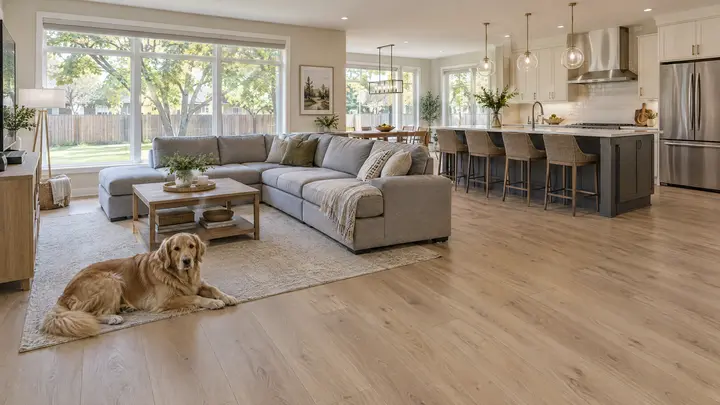
Living spaces are where looks matter most, so pick the plank for its grain and texture. Wider 9 by 60 inch planks read as contemporary and make an open plan feel larger; a 7 by 60 inch plank looks more traditional and suits an older house. Put felt pads under entertainment units, sofas and chairs, since these are the rooms guests see.
Bedrooms benefit from the foam backing, which cuts sound between floors in a two-storey house or a multi-unit building and cushions bare feet. Parents like that LVP cleans up far more easily than carpet in a child's room. For a home office, a wood-look plank gives a professional backdrop on video calls and the wear layer resists desk chair casters; a clear chair mat at the desk extends its life.
Entries and mudrooms
The front and back doors take constant traffic, wet boots, grit and the salt and sand of a Canadian winter. This is where a thick wear layer and a rigid SPC core earn their keep. A tile-format plank at the door also marks a clear transition from outside to inside.
Pets, rentals and light commercial use
Dogs and cats scratch soft floors, have accidents and slip on smooth ones. A wear layer of 20 mil or more resists claws well, and the waterproof construction means accidents clean up without stains or odours. Some surfaces are slippery for older dogs or those with weak joints; area rugs on the main routes give them grip.
Landlords value LVP because it is durable, easy to maintain and good looking at a reasonable price, and a well installed floor lasts through several tenancies. Individual planks can be replaced without refinishing the whole room, so keep spare boxes from the original order. That targeted repair is impossible with sheet vinyl and impractical with hardwood.
LVP also works in small retail spaces, offices, boutiques and service businesses, and some lines carry a commercial warranty for that use. Installation is quick, which keeps a business closed for less time.
Where LVP is not the right floor
In a formal dining room or a higher-end home where buyers expect authentic materials, solid or engineered hardwood may be the better investment. Modern LVP is convincing, but a trained eye can tell, and where resale rests on real finishes, real wood holds its value better.
LVP is an interior floor. Covered porches, sunrooms and three-season rooms swing in temperature enough to move a floating floor, and direct sun can fade some products over time.
Over radiant heat, check before you buy. Some LVP is rated for it and some is not, and heat can affect the dimensional stability or the adhesive of products that are not.
Installation rules that protect the floor
- A flat, clean, sound subfloor. Concrete should be level within 3/16 of an inch over 10 feet; a wood subfloor should be fastened with no movement or squeak. Small imperfections show through in time and can separate the joints.
- Acclimation. Let the boxes sit in the house for at least 48 hours before installation, especially in winter when they arrive cold.
- Expansion gaps. LVP floats and must be free to move with temperature and humidity. Keep the gap around the perimeter, at doorways and around cabinets and posts; quarter round or baseboard covers it.
- Buy extra. Order at least one box beyond the measured area. Cutting waste runs 5 to 10 percent, and the spare planks are your repair stock years later, when matching a discontinued colour is often impossible.
Care and repairs
Dry mop or vacuum regularly to lift the grit that scratches a floor. Damp mop with plain water or the maker's cleaner; avoid harsh chemicals, abrasive pads and standing water that could seep into the seams. Felt pads under furniture, doormats at the doors and rugs on the busiest paths keep the floor looking new for longer.
Fine scratches in the wear layer cannot be repaired, but they are usually visible only up close. Anything worse is handled by swapping the damaged plank for one from the spare box.
Luxury vinyl plank on the floor in Cambridge
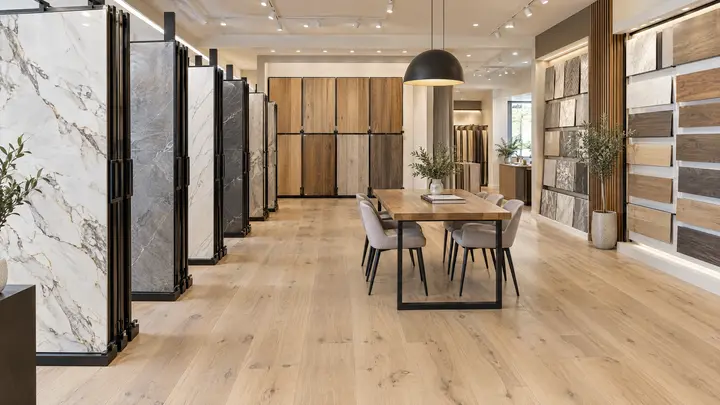
The gap between economy and quality LVP is large, in looks, comfort and how long it lasts, and the way to judge it is to stand on the boards. The showroom at 15 Sheldon Dr in Cambridge carries Jacob Quality Floors among its vinyl plank lines, with the SPC tile, 8 mm plank and foam-backed series at full size, and our own crews install across Cambridge, Kitchener, Waterloo and Guelph.
Stand on the SPC tile, the 8 mm planks and the foam-backed series at 15 Sheldon Dr, or send us your rooms for an itemised estimate.