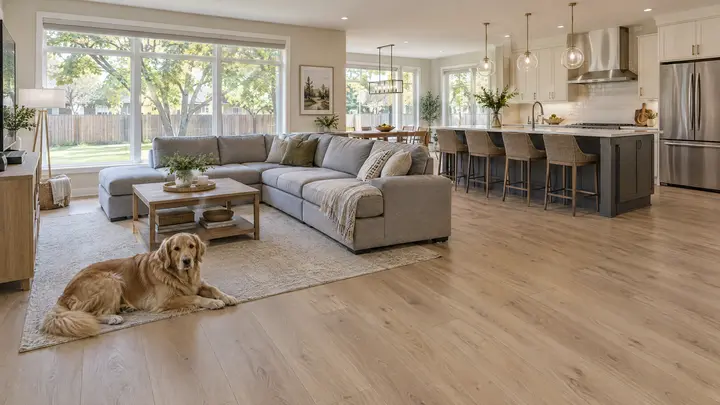
Why luxury vinyl plank suits homes with dogs
Hardwood scratches too easily, carpet traps odours and stains, and tile is cold and slippery under paws. LVP answers the usual complaints:
- Waterproof: quality LVP is completely waterproof, not just water-resistant, so accidents and spills do not seep into the subfloor and cause mould or odours.
- Scratch resistance: the wear layer resists pet nails far better than hardwood or laminate, so the floor keeps its look under daily traffic.
- Easy cleanup: messes wipe away with soap and water, and the non-porous surface does not hold odours or bacteria the way carpet does.
- Comfort: it has a slight give underfoot and does not feel cold like tile or stone, so dogs are happy to lie on it.
- Looks: modern vinyl copies oak, maple, walnut, stone or tile convincingly.
- Price: generally more affordable than hardwood, while performing better in a pet household.
The wear layer decides how long it lasts
The wear layer is the clear protective coating on top of the plank, between your dog's nails and the printed layer underneath. Its thickness is measured in mils (thousandths of an inch), and that number is the single best predictor of how the floor resists scratches, scuffs and daily wear.
- 20 mil: the minimum for a home with pets. Enough for one or two medium-sized dogs with normal activity.
- 40 mil: for heavy pet traffic or several dogs. Noticeably better protection and a longer life.
- Commercial grade: for several large or very active dogs, look at commercial LVP with thicker wear layers built for offices and shops.
Many owners underestimate what they need and buy a thinner wear layer to save money up front, then replace the floor early. Twenty mil is the floor, not the ceiling.
Texture, colour and core
Three more details separate a vinyl floor that works with dogs from one that does not.
Traction. Smooth, glossy vinyl is slippery for dogs and leads to slips, falls and joint strain, especially in large breeds and older dogs with hip or knee trouble. Walk on the samples in socks: if it feels slippery to you, it will be slippery for your dog. Choose a textured or embossed finish, ideally one where the embossing follows the printed grain.
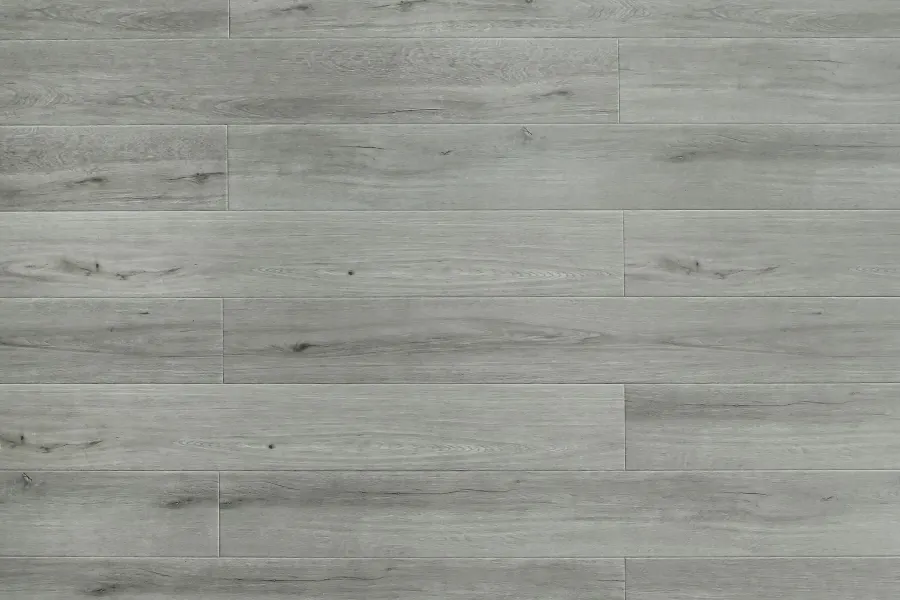
Colour and pattern. Planks with plenty of colour variation and realistic grain hide scratches, scuffs and dirt. Avoid flat solid colours and very light or very dark extremes. Medium browns, greys and multi-tone planks camouflage wear best, and wide planks mean fewer seams where moisture could collect.
Core. Some budget vinyl is only water-resistant, and prolonged moisture still damages it. For a pet household the core must be waterproof through and through: look for products labelled waterproof, WPC (wood plastic composite) or SPC (stone plastic composite). These rigid cores do not swell, warp or break down after accidents.
How luxury vinyl compares with tile, hardwood and carpet
| Floor | For dogs | Against | Where it still makes sense |
|---|---|---|---|
| Luxury vinyl plank | Waterproof, scratch-resistant, easy to clean, warm underfoot | Needs the right wear layer and texture | Main living areas, kitchens and hallways |
| Ceramic tile | Near indestructible, fully waterproof, does not scratch, lasts 40 years or more | Cold and hard, slippery when wet, grout stains, dropped items break | Mudrooms, laundry rooms and entries, with washable rugs for grip |
| Hardwood | Natural, adds resale value, can be refinished | Not waterproof, so accidents leave permanent stains and odour; scratches from nails; costly to refinish | Low-traffic rooms away from pet zones, or very small, well-trained dogs |
| Carpet | Soft, warm, excellent traction | Traps odours, stains, allergens and bacteria; needs frequent deep cleaning or replacement | Bedrooms where dogs spend little time |
The combination that works for most families in the region is LVP through the main living areas with washable area rugs where the dog rests and plays: easy cleanup and waterproofing everywhere, comfort and grip where it counts.
As a quick guide by household:
- One or two small or medium dogs: textured LVP with a 20 mil wear layer.
- Two to four dogs, or large breeds: 40 mil or commercial-grade LVP.
- Five or more dogs, or a working kennel: ceramic tile with rugs in the right places.
- Puppies in training: LVP with a fully waterproof core.
- Senior dogs: textured LVP for traction, and no smooth finishes.
Choose LVP if your dogs spend real time indoors, you need waterproofing for accidents, you want a wood look without the vulnerability of wood, and you want simple maintenance. Consider tile if you run a kennel or have ten or more dogs, you are happy to use rugs throughout for comfort and grip, and your dogs have no joint or mobility problems.
What dog owners report
Owners who have lived with vinyl for a few years say the same things. A household with an energetic Weimaraner put a textured 20 mil plank through the whole house and reports it has held up through daily zoomies and cleans in minutes. A family with five incontinent senior dogs chose a waterproof plank for the kitchen and finds accidents no trouble at all.
The complaints are as consistent. Smooth, glossy vinyl was too slippery for one family's Newfoundland, who lost traction and stopped wanting to walk on it. Cheaper products without a fully waterproof core were ruined during puppy house-training, with moisture getting into the seams. The lesson in both directions: texture and a waterproof core matter more than brand or price.
Read the warranty before you rely on it
Scratch warranties often do not cover damage from pets, particularly in homes with several animals. The small print talks about "normal residential use" or "typical household wear", and a manufacturer can argue that three large dogs fall outside it. One owner with ten dogs found their scratch warranty would not be honoured for that reason.
So buy on quality rather than on warranty promises: a thick wear layer and a product with good real-world reports from pet owners will outlast a warranty you may not be able to claim.
Installation points for a pet household
- Subfloor: it must be clean, level and dry. Gaps or dips leave spaces where accidents can seep through and smell.
- Attached pad or separate underlayment: an attached pad removes the gap where moisture could collect; if you use a separate underlayment, make it a waterproof one made for luxury vinyl.
- DIY or professional: click-lock vinyl is DIY-friendly, but where waterproofing is the whole point, professional installation gets the seams and edges right.
- Buy 10 to 15 per cent extra and store it. Styles get discontinued, and the spare planks let you replace a damaged section years later.
Keeping a vinyl floor good with dogs
- Sweep or vacuum daily: hair, dirt and grit cause micro-scratches over time.
- Damp-mop weekly with a pH-neutral cleaner made for luxury vinyl; no flooding and no harsh chemicals.
- Wipe up accidents straight away, waterproof or not.
- Pads under furniture legs, mats at the doors and under food and water bowls, rugs in the busy zones.
- Keep nails trimmed.
- Lift rather than drag heavy items, keep indoor humidity steady, and replace a damaged plank promptly from your spares.
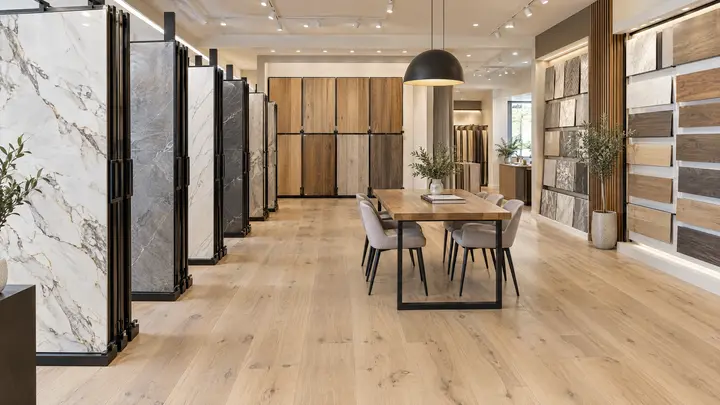
The showroom at 15 Sheldon Dr, Cambridge has textured, waterproof vinyl planks on the floor, MSI's Everlife Cyrus collection with its 20 mil wear layer among them, so you can walk on them in socks and compare the grip before you buy. Browse the vinyl flooring range or the MSI line to start.
Walk on the textured vinyl planks in socks at 15 Sheldon Dr, Cambridge, compare wear layers side by side, or ask for a free estimate for your rooms.