What laminate flooring is made of
Each plank has four layers, fused under extreme heat and pressure into one solid board:
- Backing layer. The base. It keeps the plank flat and resists moisture coming up from the subfloor, which protects against warping.
- Core layer. High-density fibreboard: compressed wood fibres bonded with resin. It gives the plank its strength, impact resistance and dimensional stability. Better laminates use HDF rather than medium-density fibreboard (MDF), which is weaker and takes on moisture more readily.
- Design layer. A high-resolution photograph of real wood grain, stone or tile. Current printing captures knots, grain variation and natural flaws, and makers use many different images so the floor does not repeat.
- Wear layer. A clear top coat of aluminum oxide or melamine resin that resists scratches, stains, UV fading and daily wear. The thicker it is, the more durable the floor, which is what the AC rating measures.
So laminate is not plastic. The bulk of the board is wood fibre; only the thin top coat is resin. Early laminate from the 1990s and early 2000s could look artificial, which is where the reputation comes from, but today's printing and embossed textures follow the grain closely enough to fool many people.
The pros of laminate flooring
- Price. The look of hardwood or stone for a fraction of the cost, with money left over for installation or a better underlayment.
- Durability. The wear layer stands up to pet claws, furniture, spills, sunlight and dropped objects. A quality laminate with a strong AC rating lasts 15 to 25 years with normal care.
- Easy care. Sweep or vacuum, damp mop with a laminate cleaner or water and vinegar, wipe spills promptly. No waxing, polishing or refinishing.
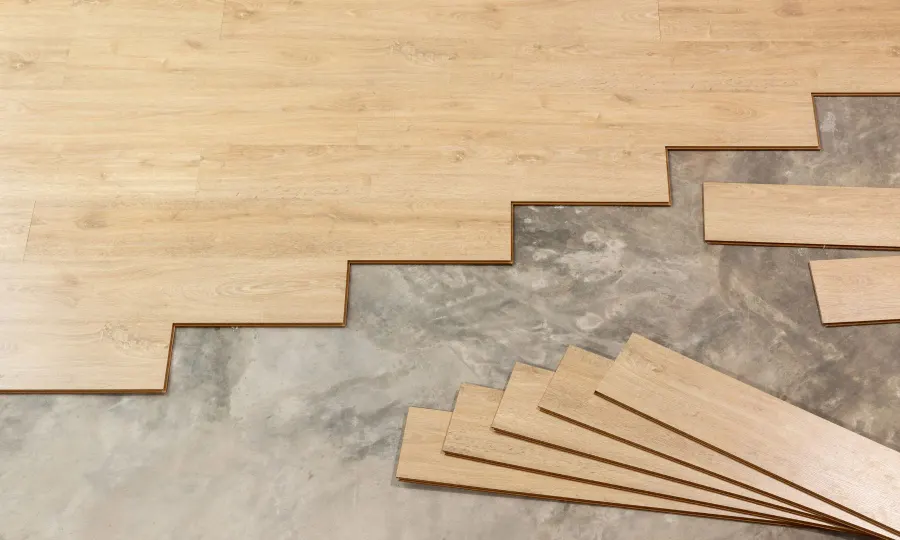
- Simple installation. Most laminate clicks together and floats over an underlayment, without glue or nails, which makes it one of the more DIY-friendly floors.
- Comfort. Warmer and softer underfoot than tile or stone, and with a good underlayment it dampens sound and gives slightly.
- Choice. Hundreds of colours, plank widths, textures and finishes, from wide pale modern planks to distressed farmhouse boards, dark traditional woods and concrete or stone looks.
The cons of laminate flooring
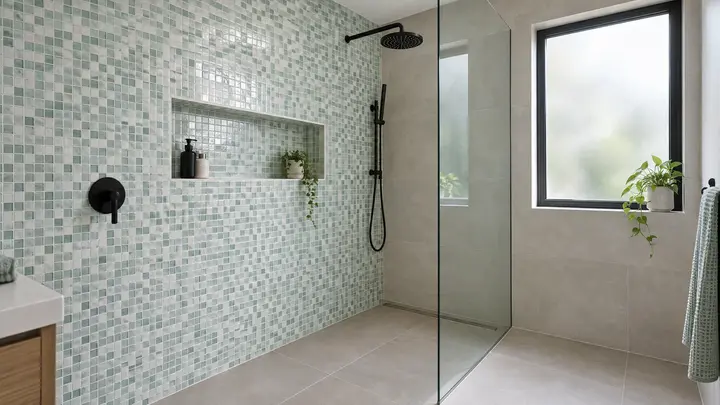
- Water. Standard laminate is water-resistant, not waterproof. The wear layer repels surface water long enough to wipe up a spill, but standing water or a soaking mop seeps into the seams and swells the core. Bathrooms, laundry rooms and damp basements need a waterproof laminate with an enhanced core, a moisture barrier under it and sealed edges and transitions.
- Feel and sound. Harder underfoot than vinyl, and without a proper underlayment it sounds hollow.
- No refinishing. Hardwood can be sanded and refinished for a 50-year life; laminate is replaced when the wear layer goes, after 15 to 25 years.
- Care limits. Steam mops, abrasive scrubbers, wax and polish all damage it.
- Where it cannot go. Saunas, steam rooms, outdoors, or any area with continuous standing water.
- Quality varies. Core density, wear layer thickness and print quality differ a lot between budget and premium lines, and some warranties are void unless the floor is installed professionally.
AC ratings and where laminate works
The AC (Abrasion Criteria) rating tells you where a laminate belongs:
- AC1: light residential use, closets and rarely used rooms
- AC2: moderate residential use, bedrooms and home offices
- AC3: heavy residential and light commercial use, living rooms, kitchens and hallways
- AC4: heavy commercial use, offices and retail
- AC5: extreme commercial use, department stores and busy public spaces
For most homes AC3 or AC4 is the right balance of durability and cost. With kids, pets or heavy traffic, do not go lower.
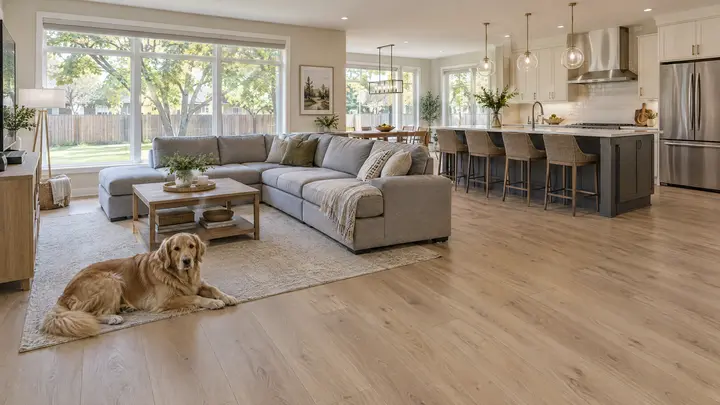
Laminate suits living and family rooms, bedrooms, dining rooms, home offices, hallways and entryways, basements with a proper moisture barrier, and kitchens with a water-resistant product. Bathrooms and laundry rooms need waterproof laminate and careful sealing around toilets and tubs; mudrooms need a higher AC rating. Do not use it in saunas, steam rooms, outdoors or where water stands.
Laminate vs hardwood, vinyl and tile
| Laminate against | Where laminate wins | Where the other floor wins |
|---|---|---|
| Hardwood | Cost; scratch and fade resistance; low maintenance (sweep and damp mop, against refinishing every 7 to 10 years); DIY floating installation | Lifespan (50 years or more with refinishing, against 15 to 25); resale value; can be refinished |
| Luxury vinyl plank | A wood-based board with a harder surface; slightly lower cost | Fully waterproof, against water-resistant; softer and quieter underfoot |
| Ceramic and porcelain tile | Cost; warmth and comfort underfoot; fast DIY-friendly installation; easier cleaning, with no grout | Fully waterproof; extreme durability in wet areas |
In short: laminate wins on price, installation and upkeep; hardwood wins on longevity and resale if you will maintain it; vinyl wins where waterproofing comes first; tile wins in wet rooms. Laminate and vinyl both look realistic, laminate through embossing and vinyl through texture matching.
How laminate is installed
- Prepare the subfloor. Clean, dry and level. Any bump, dip or debris telegraphs through the laminate; rushed prep is the usual cause of a failed floor.
- Acclimate the boxes. Let the planks sit in the room for 48 to 72 hours so they adjust to its temperature and humidity.
- Lay the underlayment. It adds moisture protection, sound dampening and a smooth bed. Some laminate has it pre-attached; a separate underlayment often performs better.
- Click the planks together row by row, leaving an expansion gap of about 1/4 inch at every wall and fixed object, staggering the seams, using tapping blocks and pull bars for tight joints, and cutting carefully around doorways, vents and obstacles.
- Fit the trim. Baseboards or quarter-round cover the expansion gap; transition strips bridge to other floors and height changes.
Small errors, such as an uneven subfloor, too little expansion gap or misaligned planks, lead to buckling and gaps. Professional installation is also what keeps some warranties valid, since several manufacturers require it.
How to care for laminate flooring
Dirt, sand and grit are laminate's enemies: under foot traffic they act like sandpaper on the wear layer. Sweep or vacuum often, with the beater bar off. Damp mop weekly with a well-wrung mop and a laminate cleaner, or three parts water to one part white vinegar; excess water is the other enemy. Wipe spills at once with a dry or slightly damp cloth, use a laminate cleaner on sticky residue, and a little vinegar or rubbing alcohol on stubborn stains.
Avoid steam mops (heat and moisture swell the core), abrasive scrubbers, wax or polish (they leave a dull film) and soaking-wet mops. Put felt pads under furniture, doormats at entrances and rugs in high-traffic zones, keep pet nails trimmed, and keep high heels and cleats off it.
How to choose laminate flooring
Start with the room: AC3 or AC4 with a thicker wear layer for high-traffic areas, waterproof or water-resistant boards with sealed edges for damp rooms, AC2 or AC3 for bedrooms where looks and comfort matter more. Then the style: light or dark, wide or narrow planks, smooth or textured, contemporary or rustic. Wood looks cover oak, maple, walnut, cherry, pine and hickory, plus distressed and hand-scraped finishes; tile and stone looks cover marble, slate, travertine and ceramic grid patterns, without the cold surface or the grout.
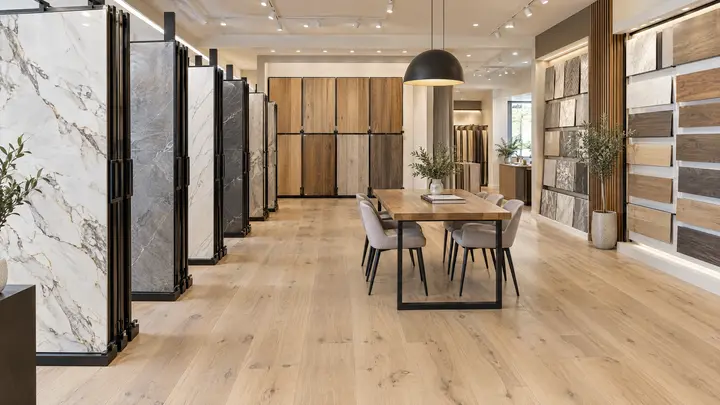
Price tracks the wear layer thickness, the realism of the print, the density and moisture resistance of the core, and the warranty. Mid-range laminate usually gives the right balance; the cheapest option rarely does. Read the warranty for wear (usually 15 to 30 years), staining, fading and structural defects, whether it covers light commercial use, and whether it requires professional installation. Finally, do not buy from photos. Bring samples home and look at them in your own light; what works in a showroom may not work in your room.
Club Ceramic at 15 Sheldon Dr in Cambridge stocks laminate from Avolis, CS (Canadian Standard), Home's Pro, Impressive Floors, Jacob Flooring, MSI, NAF and Simba, including waterproof lines for kitchens and basements, with installation by the showroom's own crews for Cambridge, Kitchener, Waterloo and Guelph. See the laminate on the floor, or compare it with vinyl plank side by side.
Walk on full-size laminate planks from eight brands at 15 Sheldon Dr, take samples home, and get an estimate for your rooms.