
Welcome to the Club Ceramic Cambridge — your trusted partner for complete premium flooring options in Cambridge, Kitchener, Waterloo, Guelph, and surrounding areas.
Your contractor says loose lay is fine. The product rep swears by it. Your DIY neighbor installed it in their basement with no issues. YouTube makes it look effortless. So why are professional installers so divided on loose lay flooring?
Here’s the uncomfortable truth: there’s a massive disconnect between how loose lay flooring is marketed and how it actually performs in the real world. Product manufacturers promote it as the easiest, most DIY-friendly option available. Meanwhile, seasoned flooring professionals are quietly refusing to install it, or—when they do—they’re not actually installing it “loose” at all.
If you’re considering loose lay flooring for your home renovation, you deserve to know what really happens after installation, why so many pros are skeptical, and what you should actually do instead of blindly following the manufacturer’s instructions. Whether you’re updating a kitchen in Cambridge, renovating a basement in Waterloo, or refinishing a rental property in Guelph, understanding the reality of loose lay flooring can save you thousands of dollars and countless headaches.
Let’s pull back the curtain on what installers really think about loose lay flooring—and what they wish they could tell every homeowner before it’s too late.
Working on a new home project? Call now for a free estimate: (647) 394-6030
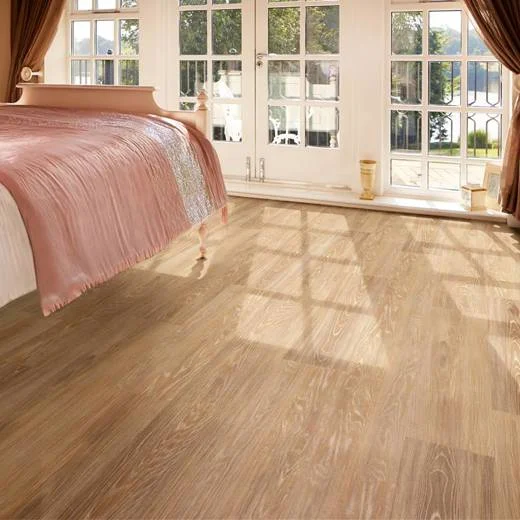
Loose lay flooring refers to vinyl products—either planks or sheet vinyl—designed to stay in place primarily through friction, weight, and grip rather than adhesive or mechanical locking systems. The backing is engineered to be heavy and slightly tacky, theoretically allowing it to “stick” to the subfloor without glue.
The appeal is obvious: no messy adhesive, no complicated click-lock mechanisms, easy removal of individual planks if damaged, and installation that seems simple enough for any motivated DIYer. Just cut it to size, lay it down, and walk away. What could be easier?
But here’s where confusion starts to creep in. In the flooring industry, “loose lay” has become something of a misnomer. There are actually several different approaches that all get lumped under this label:
True Loose Lay: Planks or sheets laid down with absolutely no adhesive—just the weight and friction of the product holding it in place.
Perimeter Glue Method: The edges and doorways are glued or taped down, while the center remains loose. This is sometimes called “modified loose lay.”
Full Spread Adhesive: Using pressure-sensitive adhesive (PSA) across the entire floor, despite the product being marketed as “loose lay.” The vinyl can still be removed with effort, but it’s definitely not loose.
Adding to the confusion, many homeowners mistake loose lay for floating click-lock flooring. These are completely different systems. Click-lock planks mechanically interlock with each other and “float” as a single unit over the subfloor. Loose lay planks are individual pieces that don’t connect to each other at all.
This terminology confusion matters because when someone says “I installed loose lay and it’s been great,” you need to ask: did they actually loose lay it, or did they use one of the adhesive methods? The answer dramatically changes what you can expect from your own installation.
Here’s what most installers won’t tell you directly: they don’t actually loose lay “loose lay” flooring.
A professional flooring installer on Reddit put it bluntly: “The rep swears up and down loose lay is fine. BS. I’ve fixed so many over the years and refuse to do them. Full spread glue is the way.”
Another industry veteran echoed this: “I’ve sold 5mm thick loose lay vinyl for the better part of 20 years and I’ve glued down every single order.”
Why the disconnect? Because professional installers live and die by their reputation. When a floor fails—when planks shift, gaps appear, or edges curl up—the homeowner calls the installer, not the manufacturer. Even if the failure is due to following the manufacturer’s instructions exactly, the installer takes the heat.
Most experienced pros have learned this lesson the hard way. They’ve done true loose lay installations as directed, only to get called back weeks or months later for problems. After enough callbacks, they simply stop doing it. When a customer insists on loose lay flooring, the installer either refuses the job or insists on using adhesive despite the product’s name.
The standard professional approach looks like this:
Full Spread Pressure-Sensitive Adhesive (PSA): Roll adhesive across the entire subfloor, let it get tacky, then install the loose lay planks. The planks bond firmly but can still be removed with a heat gun if needed. This is what pros consider the “right” way to install loose lay products.
The Perimeter Compromise: For homeowners who balk at the adhesive, some installers will agree to glue down the perimeter, doorways, and high-traffic areas while leaving the center loose. This is the middle ground between manufacturer instructions and professional standards.
There are specific situations where pros do recommend genuine loose lay—notably in commercial settings where the ability to replace individual damaged planks is critical. ADA-accessible homes where flooring might need to be lifted to access underfloor systems are another example. But these are exceptions, not the rule.
The uncomfortable reality is that if you hire a reputable installer to put down “loose lay” flooring, there’s a very good chance they’re going to glue it down whether they explicitly tell you or not. And if they don’t, you should probably ask them why.


Let’s talk about what actually happens to loose lay flooring over time when it’s installed according to manufacturer instructions—truly loose, with minimal or no adhesive.
Vinyl flooring expands and contracts with temperature changes. This is true of all vinyl products, but it becomes a critical issue with loose lay because there’s nothing mechanically holding the planks in position.
Here’s how the failure cascade typically develops:
During warm weather, the planks expand slightly. During cold weather, they contract. Each cycle creates microscopic movement. Initially, you won’t notice anything. But over time, a tiny gap appears between planks—maybe 1/32 of an inch, barely visible.
Then dust and grit settle into that gap. The next expansion cycle, the planks can’t close completely because there’s debris in the way. The gap gets fractionally larger. More dirt gets in. The cycle continues.
As one installer described it: “With temperature change it’ll expand and contract, a little piece of grit gets in there then more and then under and it starts to fail.”
The timeline varies wildly based on factors like:
Some homeowners report perfect performance for 5-8 years. Others see noticeable problems in six weeks. One installer reported reinstalling a loose lay floor that failed in less than two months despite being installed correctly.
Here’s the irony that drives installers crazy: loose lay flooring is marketed as easy and forgiving, but it’s actually MORE demanding on subfloor preparation than glued or click-lock installations.
Because the planks aren’t bonded to anything, every imperfection in the subfloor telegraphs directly through to the surface. A small bump or depression that would be tolerable with glued vinyl becomes a movement point with loose lay—a spot where the plank can rock, shift, or develop a gap.
Professional subfloor requirements for loose lay include:
Perfectly Clean: Not just swept—scrubbed clean. Any residue, old adhesive, paint drips, or debris creates high spots that prevent proper contact.
Perfectly Level: Within 3/16″ over 10 feet, which is tighter than many other flooring types. Low spots mean the plank isn’t making full contact and can shift.
Perfectly Smooth: No rough patches, raised nail heads, or texture variations that could prevent the backing from gripping evenly.
Perfectly Dry: Moisture issues that might be manageable with other installations become critical with loose lay because moisture can migrate under the loose planks.
Getting a subfloor to this standard often requires:
The cruel joke is that people often choose loose lay specifically because they want an “easy” installation that doesn’t require professional-level prep work. But achieving a subfloor good enough for successful loose lay installation requires exactly the professional expertise they were hoping to avoid.
If you’re not willing to do this level of prep—or pay someone to do it—you shouldn’t be considering true loose lay installation.
If your loose lay flooring is in a kitchen or laundry room, you will eventually need to move appliances. Pulling out a refrigerator for cleaning, replacing a dishwasher, or moving a stove for repairs—these normal home maintenance tasks become flooring nightmares with loose lay.
Because the planks aren’t secured, heavy appliances can catch on edges and drag planks along, creating bunching, wrinkling, or gaps that don’t close again. Even with cardboard protection (the standard DIY precaution), the sheer weight and friction of a loaded refrigerator can distort loose vinyl.
As one homeowner advocate for loose lay honestly admitted: “You definitely do need to leave other edges untaped so the flooring can expand and contract with temperature. It will never be so carefree as glued vinyl.”
Professional installers who encounter loose lay in kitchens during service calls often find themselves explaining to frustrated homeowners why there’s now a permanent hump in front of the fridge or why the floor has pulled away from the wall after a dishwasher replacement.
Vinyl flooring is waterproof. This is true. The vinyl material itself won’t be damaged by water.
But “waterproof flooring” and “waterproof floor installation” are not the same thing.
With loose lay installation, water can get under the planks at the seams. A spilled glass of water might not be a problem—it can evaporate or be wiped up. But what about a slow leak from a dishwasher? An overflowing washing machine? A toilet supply line failure?
Water can spread under loose lay flooring, potentially affecting a large area before you even realize there’s a problem. And once water is under the floor, you have to pull up planks to dry the subfloor properly—which is easier than with glued vinyl, admittedly, but still a hassle that could have been avoided with proper installation.
Even routine spills become more complicated. If you spill milk or juice near a seam, it can seep underneath where you can’t easily clean it. Over time, this can lead to odors or residue that affects the floor’s grip on the subfloor.
This article might sound like a complete indictment of loose lay flooring, but that’s not entirely fair. There are success stories—situations where loose lay performs well and homeowners are genuinely happy with the results.
Let’s look at what these successful installations have in common.
One Reddit user reported: “A few years ago we put down loose lay LVP in my parents’ basement and it was piss-easy for amateurs like us to install, and has held up amazingly for about 5 years of being a second kitchen/kids play area that gets very regular use.”
Another homeowner with sheet vinyl shared: “I have it in the kitchen cooking area and the laundry room, and I’ll replace it soon—after 20 years of use.”
What made these installations work?
Excellent Subfloor Preparation: Even the successful DIY installations involved significant prep work. The 20-year success story mentioned above included extensive sanding to remove old adhesive and careful attention to smoothness.
Strategic Adhesive Use: Most success stories involve at least some adhesive—perimeter glue, double-stick tape in stress areas, or full spread adhesive despite the “loose lay” label. True loose lay without any adhesive is rare even among satisfied customers.
Appropriate Environments: Basements with concrete floors and stable temperatures seem to perform better than upper floors with wood subfloors and greater temperature swings. Areas without heavy appliances or furniture that needs frequent moving also fare better.
Realistic Expectations: Successful loose lay users tend to view it as a medium-term solution rather than a permanent installation. The ability to easily replace it after 10-20 years is seen as a feature, not a bug.
Based on both professional recommendations and homeowner experiences, loose lay flooring makes the most sense in these situations:
Basement Installations Where Removability Matters: If you might need to access the subfloor for moisture issues, foundation work, or plumbing, loose lay’s easy removal is a genuine advantage. Just understand you’ll likely need to glue the perimeter at minimum.
Rental Properties: If you’re a landlord who needs to replace flooring between tenants or repair damage from specific incidents, the ability to swap out individual planks without disturbing the whole floor has value. Again, use at least perimeter adhesive to prevent tenant-caused shifting.
Commercial Settings with High Damage Risk: Retail spaces, medical offices, or facilities where specific areas see heavy equipment or spills might benefit from easy plank replacement. Professional-grade loose lay with full spread adhesive gives you the replaceability benefit without the movement problems.
Temporary Installations: If you’re staging a home for sale, need flooring for a short-term rental, or are doing a quick cosmetic update before a bigger renovation, loose lay installed according to manufacturer specs might be acceptable. You’re not expecting it to last decades anyway.
Spaces Where You Need Subfloor Access: Homes with underfloor heating, ADA-accessible homes with underfloor lifts or ramps, or situations where utilities might require periodic floor removal make loose lay’s removability valuable.
The pattern here? Loose lay works best when its key advantage—easy removal and replacement—is actually important to your situation. If you just want easy installation and long-term durability, you’re probably looking at the wrong product.
If you walk into a flooring showroom and say you want loose lay because you heard it’s easy to install, here’s what knowledgeable professionals will probably try to steer you toward instead.
Click-lock luxury vinyl plank has essentially replaced loose lay as the go-to recommendation for DIY-friendly installation. Here’s why:
The planks mechanically lock together, creating a single floating floor that moves as a unit rather than as individual pieces. This makes it far more stable than loose lay while still being relatively easy to install. Temperature changes cause the entire floor to expand or contract together, not individual planks shifting independently.
Click-lock flooring is also genuinely removable and replaceable, though it requires more care than loose lay. You typically need to disassemble from the nearest wall to reach a damaged plank, but it’s doable without specialized tools.
Modern click-lock systems are remarkably good. The locking mechanisms have evolved to be both strong and forgiving of slight installation imperfections. Many products include attached underlayment padding, making them comfortable underfoot and providing some sound dampening.
For the average homeowner who wants to DIY their flooring, click-lock LVP delivers the ease of installation that loose lay promises, with far better long-term performance and stability.
When professional installers are working on their own homes, they almost universally choose full glue-down luxury vinyl plank over loose lay or click-lock options.
Why? Because it’s the most stable, longest-lasting, and highest-performance option available.
Modern pressure-sensitive adhesives have made glue-down installation far less scary than it sounds. You’re not dealing with permanent industrial adhesive that’s impossible to remove. PSA remains somewhat tacky and allows repositioning during installation, then firms up over time to create a strong but not permanent bond.
If you ever need to remove glue-down LVP, a heat gun softens the adhesive and allows planks to be pulled up. It’s more work than lifting loose lay, but it’s not the nightmare that old-school flooring adhesive removal could be.
The performance benefits are substantial:
For kitchens, bathrooms, laundry rooms, or any area where performance and longevity matter, glue-down installation is what pros choose when quality trumps convenience.
Here’s the approach that splits the difference: buy loose lay product but install it with full spread pressure-sensitive adhesive.
Why would you do this? Because loose lay LVP is often constructed differently than standard glue-down vinyl. It typically has:
By buying loose lay product and gluing it down properly, you get the quality construction and replaceability benefits (you CAN remove it with effort if needed) while eliminating all the movement and stability problems of true loose lay installation.
This is actually what many professional installers do routinely. They order loose lay products from manufacturers because those products are well-made, then install them with adhesive because that’s what performs reliably.
From a homeowner’s perspective, this approach costs more upfront (you’re paying for adhesive and possibly professional installation), but you’re getting flooring that will perform reliably for 15-20+ years instead of gambling on whether true loose lay will last or fail.
Let’s talk about money—not just the sticker price, but the total cost of ownership over the life of your flooring.
Material Costs: Loose lay LVP typically costs between $2.50-$6.00 per square foot for quality products, roughly comparable to click-lock options and sometimes slightly more expensive than standard glue-down vinyl. The material cost itself isn’t the deciding factor.
DIY Labor Savings: This is where loose lay looks attractive. If you can successfully install it yourself, you’re saving $1.50-$3.00 per square foot in professional installation costs. For a 200-square-foot kitchen, that’s $300-$600 in your pocket.
BUT—Subfloor Prep: If your subfloor needs work to meet the standards for successful loose lay installation, those savings evaporate quickly. Professional floor grinding, leveling compound application, and prep work can easily cost $2-$4 per square foot, potentially more than the installation labor you’re saving.
Professional Installation: If you hire out the work, many installers either charge a premium for loose lay (because of the extra prep required and callback risk) or they’ll install it with adhesive, adding material costs. You might pay the same or more than standard glue-down installation.
This is where the math gets interesting—or depressing, depending on your perspective.
Scenario 1 – Success: Your loose lay floor performs perfectly for 15-20 years. You’re thrilled. The cost per year of ownership is low, and you feel vindicated in your choice. This absolutely happens, particularly with adhesive-assisted installations and excellent subfloor prep.
Scenario 2 – Moderate Issues: Your floor develops some gaps after 3-5 years but remains serviceable. You live with it or cover problem areas with furniture and rugs. You’re not thrilled, but it’s acceptable. This is probably the most common outcome with true loose lay installations.
Scenario 3 – Failure: Your floor develops significant problems within 1-2 years. Planks are shifting, gaps are growing, edges are curling. You have three options:
The people who’ve experienced Scenario 3 will tell you emphatically that paying an extra $400 upfront for proper glue-down installation would have been the bargain of the century.
Your Time: If you go the DIY route and it doesn’t work out, how many hours will you spend on research, attempted repairs, and eventual reinstallation? At any reasonable valuation of your time, this adds up quickly.
Stress and Frustration: This isn’t strictly financial, but watching your newly installed floor fail is genuinely stressful. For some homeowners, the anxiety isn’t worth whatever they saved.
Relationship Strain: If you hired an installer who was reluctant to do true loose lay but you insisted, and then it fails, the dispute over who’s responsible can be ugly and expensive if it escalates to legal action.
Resale Impact: This is subtle but real. When selling your home, flooring that’s obviously failing or has visible gaps and movement looks like a liability to buyers. Quality flooring is an asset; questionable flooring is a negotiating point that costs you at closing.
If you’re still considering loose lay flooring after everything you’ve read, here are the questions you need to ask—and the answers you should be listening for.
“Will you actually loose lay this, or do you recommend adhesive?”
Red flag answer: “Oh yeah, we’ll just lay it down, no problem.”
Good answer: “I strongly recommend at least perimeter adhesive, but ideally full spread PSA. I’ve seen too many callbacks on true loose lay installations.”
“What’s your callback rate on loose lay installations?”
Red flag answer: Vague assurances without specifics, or “We don’t do many so I can’t say.”
Good answer: Specific numbers, or honestly admitting they don’t do true loose lay installations because of past problems.
“What specific subfloor prep is required for my space?”
Red flag answer: “Just needs to be pretty clean and flat.”
Good answer: Detailed assessment after physically examining your subfloor, with specific prep recommendations and associated costs.
“What’s your warranty on a true loose lay installation versus a glued installation?”
Red flag answer: Same warranty for both, or no meaningful warranty offered.
Good answer: Longer or more comprehensive warranty when adhesive is used, reflecting confidence in that method.
How perfect is my subfloor, really?
Be brutally honest. Get down on your hands and knees with a straightedge and a flashlight. Any bumps, dips, rough spots, or irregularities? If yes, you need significant prep work before loose lay is viable.
How stable is my home’s temperature and humidity?
Do you have central air conditioning? Is your home well-insulated? In the Kitchener-Waterloo-Cambridge region, we get hot, humid summers and cold, dry winters. If your home experiences significant seasonal swings, loose lay stability becomes more questionable.
Will I be moving appliances regularly?
If your loose lay is going in a kitchen or laundry room, think about how often you clean behind the fridge, move the stove, or need appliance service. If the answer is “rarely or never,” you might be okay. If it’s “annually or more,” consider other options.
Am I doing this to save money or because I need subfloor access?
If your primary motivation is saving installation costs, loose lay probably isn’t the smart choice once you factor in prep requirements and failure risk. If you genuinely need the ability to remove flooring easily, it makes more sense—but still use adhesive.
Do I have the skills for professional-level subfloor prep?
Be honest about your DIY abilities. Proper floor prep requires specific tools, materials, and skills. If you’re not confident in your ability to achieve professional standards, you shouldn’t be considering DIY loose lay installation.
These are the warning signs that you should absolutely not proceed with loose lay flooring:
As flooring retailers who see hundreds of installations and hear about both successes and failures, here’s our honest perspective on loose lay flooring.
The gap between how loose lay is marketed and how it actually performs in real-world conditions is substantial. Manufacturers emphasize the ease and convenience while glossing over the very specific conditions required for success. Homeowners understandably get excited about DIY-friendly installation and cost savings, then get frustrated when reality doesn’t match the brochure.
Professional installers have learned through painful experience that true loose lay installation is a gamble. When it works, everyone’s happy. When it fails—even if installed exactly per manufacturer specs—the installer takes the blame and loses money on callbacks. This is why so many experienced pros have simply stopped doing it.
Our general recommendation for most residential applications: choose click-lock floating LVP if you want DIY-friendly installation, or proper glue-down LVP if you want maximum performance and longevity. Both options will serve you better than true loose lay installation in the majority of situations.
When we DO recommend loose lay products, we recommend installing them with at least perimeter adhesive, and preferably full spread pressure-sensitive adhesive. This gives you the quality construction of loose lay products with the stability and performance of proper glue-down installation.
The “loose lay” in the product name becomes somewhat ironic—you’re buying loose lay but not installing it loose. But this hybrid approach delivers reliable results that you can feel confident about for years to come.
The situations where true loose lay makes sense are limited: commercial settings where plank replaceability is critical, ADA homes requiring subfloor access, or truly temporary installations where long-term performance isn’t the goal.
For your typical kitchen renovation, basement finishing project, or whole-home flooring replacement, true loose lay installation is a risk that doesn’t offer enough upside to justify the potential problems.
Reading about flooring online gives you valuable information, but every home is different. Your subfloor condition, local climate, usage patterns, and specific needs all factor into what will work best for your situation.
This is why we always recommend seeing samples in person and having an honest conversation about your specific project. We’d rather talk you out of a product that’s likely to cause problems than make a sale that results in a callback and an unhappy customer.
Whether you’re renovating a home in Cambridge, updating a rental property in Kitchener, finishing a basement in Waterloo, or working on any project throughout Guelph, Elmira, St. Jacobs, Wellesley, Paris, Puslinch, or Brant County, we can assess your situation and recommend options that will actually work for your needs.
Visit our Cambridge showroom to walk on installed floors, examine different products, and discuss your project with staff who understand both the marketing promises and the installation realities. We carry loose lay products—and we can explain exactly when and how they should be installed for success.
The right flooring choice isn’t about what’s easiest to install or what has the best marketing. It’s about what will perform reliably in your specific home for years to come. Sometimes that’s loose lay installed properly with adhesive. Often it’s click-lock or glue-down alternatives that better match your needs.
Let’s figure out together what makes sense for your project—not what the brochure says, but what actually works.