
Welcome to Club Ceramic Cambridge — your trusted partner for complete premium flooring options in Cambridge, Kitchener, Waterloo, Guelph, and surrounding areas.
It’s almost 2026. Companies fleeing Greater Toronto’s $17.87 per square foot industrial rents are discovering Southwestern Ontario—and landlords with the right infrastructure are capturing premium tenants at $14.50+ per square foot. The industrial real estate boom in Cambridge, Kitchener, and Waterloo isn’t slowing down, and property owners who understand the economics of strategic infrastructure investment are winning the competition for quality tenants.
With vacancy rates hovering at just 1.1% across Hamilton, Kitchener, Waterloo, Cambridge, and Guelph, you might assume any available warehouse space will lease quickly. The reality is more nuanced. While demand is high, tenants have options—and in a market where new purpose-built facilities command premium rates, older properties must differentiate themselves through smart capital improvements that deliver measurable returns.
Industrial flooring represents one of the highest-ROI investments a property owner can make. It’s not a cosmetic upgrade or maintenance expense—it’s strategic infrastructure that directly impacts tenant retention, rental rates, operating costs, and property valuation. For owners and investors in Southwestern Ontario’s 155 million square foot industrial market, understanding flooring economics isn’t optional—it’s essential to maintaining competitive advantage.
This guide is for commercial property owners, real estate investors, developers, and facility managers who want to maximize warehouse value through data-driven flooring decisions in Cambridge, Kitchener, and Waterloo’s rapidly evolving industrial landscape.
Working on a new home project? Call now for a free estimate: (647) 394-6030
The numbers tell a compelling story. Greater Toronto’s industrial market has reached a breaking point with vacancy rates below 1% and average asking rents of $17.87 per square foot. These economics are pushing logistics companies, manufacturers, and distribution operations to expand their search radius into Southwestern Ontario’s more affordable markets.
Cambridge, Kitchener, Waterloo, Cambridge, and Guelph collectively offer 155 million square feet of industrial space with significantly more favorable economics. Average asking rents in Southwestern Ontario stand 32% below Greater Toronto rates, creating immediate operational savings for companies making the move. Yet this price advantage doesn’t mean compromising on quality or accessibility—properties in the region offer excellent transportation infrastructure, skilled labor pools, and proximity to both Toronto and U.S. markets via the Highway 401 corridor.
New construction in the region now commands rents north of $14.50 per square foot, narrowing the gap with Greater Toronto to just 19% for modern facilities. This pricing compression signals market maturation and rising tenant expectations. Companies relocating from premium GTA facilities expect comparable quality—just at better rates.
The tight 1.1% vacancy rate in Southwestern Ontario creates both opportunity and pressure for landlords. On one hand, strong demand means properties will attract interest. On the other hand, competition from purpose-built facilities with modern specifications forces older properties to differentiate themselves beyond price alone.
Tenant expectations have evolved considerably. Twenty years ago, a warehouse was evaluated primarily on square footage, ceiling height, and loading docks. Today’s tenants assess operational efficiency, energy costs, safety features, and total cost of occupancy. The floor beneath their operations directly impacts each of these factors.
Property owners face a strategic choice: compete primarily on price by deferring capital improvements, or invest in infrastructure that justifies premium rates and attracts quality tenants who sign longer leases. The economics overwhelmingly favor the latter approach, particularly when flooring investments deliver 200-400% ROI over a typical 10-year lease term.
Cambridge occupies a particularly advantageous position in Southwestern Ontario’s industrial market. Located along the Highway 401 corridor with direct access to Toronto (one hour), Hamilton, and U.S. border crossings, the city serves as a natural distribution hub for companies serving Ontario and broader North American markets.
The manufacturing sector has deep roots in Cambridge, with established industrial parks and a skilled trades workforce. As Kitchener-Waterloo’s technology sector expands, Cambridge increasingly attracts tech-adjacent operations—fulfillment centers, specialized manufacturing, and logistics operations serving innovation economy companies.
Property values in Cambridge have appreciated alongside this demand, creating wealth for owners who maintained their assets properly. Conversely, properties with deferred maintenance—particularly obvious issues like deteriorated flooring—struggle to capture their full market potential even in a tight vacancy environment.
Industrial flooring investments typically range from $3 to $8 per square foot depending on the system selected, substrate condition, and project scope. For a 50,000 square foot warehouse—a common size in the Cambridge market—this translates to an initial investment between $150,000 and $400,000.
These numbers may seem substantial, but they must be evaluated against the economic impact over the life of a tenant relationship. Industrial leases typically run 5-10 years, and the flooring investment affects every aspect of property economics during that period.
The ROI calculation for industrial flooring encompasses three primary drivers: tenant retention, rental rate justification, and operating cost reduction. Each delivers measurable financial benefit that compounds over time.
Tenant retention represents the primary ROI driver for industrial flooring investments. Vacancy costs commercial landlords significantly more than most realize. When a tenant vacates, property owners face 4-6 months of lost rent during the search for a new tenant, tenant improvement period, and lease negotiation process. Leasing commissions typically equal 5-6% of the total lease value—often $100,000 or more for a substantial industrial space.
Consider the economics of a 50,000 square foot facility leasing at $13 per square foot annually. That’s $650,000 in annual rent, or $6.5 million over a 10-year lease. If proper flooring maintenance and quality improvements keep that tenant for an additional five-year term, the landlord avoids losing months of rent, paying new leasing commissions, and investing in tenant improvements for a new occupant. The avoided costs alone justify the flooring investment multiple times over.
Rental rate justification provides the second major economic benefit. Properties with superior flooring can command $1-2 per square foot premium over comparable properties with basic or deteriorated floors. This premium reflects real operational value to tenants—reduced maintenance costs, improved safety, better aesthetic presentation for visitors, and enhanced productivity.
In a 50,000 square foot facility, a $1.50 per square foot rental premium generates $75,000 in additional annual revenue. Over a 10-year lease, that’s $750,000 in incremental income from a $250,000 flooring investment—a 300% return before considering any other benefits.
Operating cost reduction delivers ongoing savings throughout the lease term. Quality industrial flooring systems reduce maintenance labor and materials, minimize tenant service calls, improve energy efficiency through light-reflective surfaces, and reduce liability exposure through enhanced safety features. These operational benefits compound annually and contribute to net operating income improvements that directly impact property valuation.
The financial case for industrial flooring investment becomes even more compelling when examining break-even timeframes. Based on typical Southwestern Ontario industrial market economics:
A $300,000 flooring investment in a 50,000 square foot warehouse breaks even in 2-4 years when considering only the rental premium component. If the improvement enables a $1.50 per square foot rental increase, the investment pays for itself in four years through increased rent alone.
When factoring in avoided vacancy costs, reduced operating expenses, and tenant retention benefits, the effective payback period shrinks to 18-36 months. Over a full 10-year lease term, total return on investment typically ranges from 200% to 400%, comparing favorably with most other capital improvements landlords can make.
These returns assume normal market conditions and prudent financial management. In the current tight-vacancy Southwestern Ontario market, where quality industrial space is scarce and tenant demand is high, well-maintained properties can achieve even stronger returns by avoiding any vacancy period between tenants.
Sophisticated property owners evaluate flooring investments within the context of their overall capital strategy. Industrial flooring typically qualifies as a capital expense that can be amortized over 10-15 years, providing tax advantages while improving property economics.
Some owners include flooring upgrades in tenant improvement allowances, particularly when securing long-term leases with creditworthy tenants. This approach defers the cost recovery but ensures the specific flooring system meets the tenant’s operational needs, reducing the risk of dissatisfaction or disputes during the lease term.
For properties being prepared for sale or refinancing, strategic flooring investments made 6-12 months before the transaction can significantly impact valuation. Appraisers and buyers recognize quality infrastructure as an indicator of proper property management and reduced future capital needs.








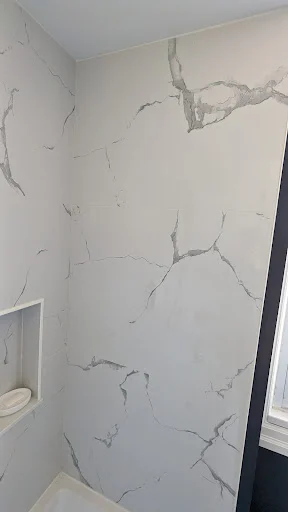
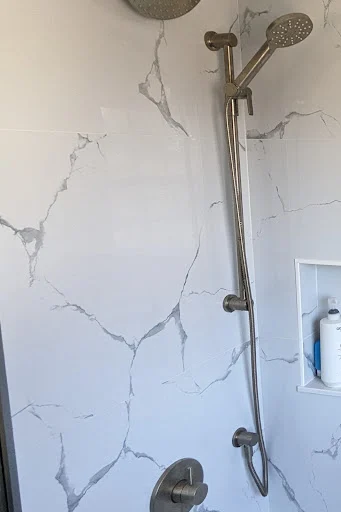



Polished concrete has become the gold standard for modern distribution centers, e-commerce fulfillment operations, and general warehousing applications. The system involves mechanically grinding and polishing the concrete surface to create a glass-like finish that’s both functional and aesthetically impressive.
The durability of properly installed polished concrete is exceptional—20+ year lifespans are common even in high-traffic environments. Unlike coatings that sit on top of concrete, polished concrete is the actual concrete surface refined to optimal performance. This eliminates delamination concerns and creates a floor that actually becomes denser and more durable over time.
Light reflectivity is a significant economic benefit often overlooked in initial cost analysis. Polished concrete can increase ambient light levels by 20-30% compared to bare or coated concrete, reducing lighting costs throughout the facility. In a 50,000 square foot warehouse operating 16 hours daily, this translates to measurable annual energy savings.
The floor is forklift-friendly, resisting the marking and wear that destroys other flooring systems. It’s virtually dust-free once properly refined, which matters tremendously for operations involving electronics, food products, or any inventory that can’t tolerate contamination. Maintenance consists primarily of routine cleaning—no waxing, no refinishing, no coating replacement.
Installation costs for polished concrete typically range from $3 to $6 per square foot depending on the existing concrete condition and desired finish level. While not the cheapest option initially, the lifecycle cost is among the lowest of any industrial flooring system.
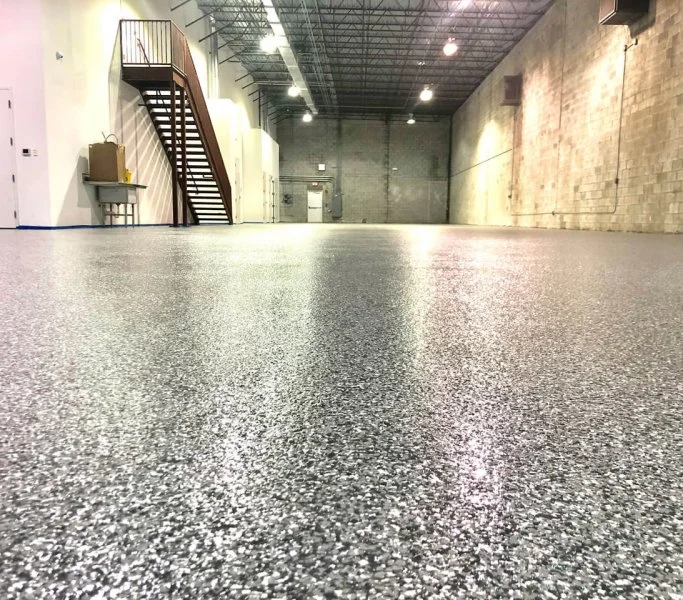
Epoxy coating systems serve facilities with specific operational requirements beyond what polished concrete can deliver. Food processing operations, pharmaceutical manufacturers, chemical plants, and specialized manufacturing environments often require seamless, non-porous surfaces that can withstand rigorous cleaning protocols and chemical exposure.
Modern epoxy systems create a barrier between the concrete substrate and the operational environment. When properly installed, these systems are seamless across large areas, eliminating joints where bacteria, chemicals, or contaminants could accumulate. This characteristic makes epoxy essential for facilities subject to CFIA (Canadian Food Inspection Agency) inspections or pharmaceutical GMP (Good Manufacturing Practice) requirements.
Chemical resistance varies by epoxy formulation, allowing specification of systems matched to specific exposure risks. Food processing operations dealing with organic acids require different chemical resistance than automotive facilities handling petroleum products or pharmaceutical operations managing solvents.
Safety features can be built into epoxy systems through color-coding for different zones, anti-slip aggregate additives for wet environments, and high-visibility markings for traffic lanes or hazard areas. These features improve workplace safety while helping facilities meet WSIB (Workplace Safety and Insurance Board) requirements.
Cost for epoxy systems ranges from $4 to $8 per square foot depending on system thickness, chemical resistance requirements, and surface preparation needs. Maintenance involves recoating every 5-7 years in high-traffic areas, which should be factored into lifecycle cost analysis.
Facilities with extreme operational demands—automotive manufacturing, heavy machinery production, high-volume forklift traffic, or thermal cycling—require flooring systems engineered specifically for abuse resistance. High-performance polyurethane and MMA (methyl methacrylate) systems deliver the durability these environments demand.
Impact and abrasion resistance exceed what epoxy can provide. These systems maintain integrity under point loads from heavy machinery, resist the cutting and gouging forces of metal fabrication operations, and tolerate the thermal shock of processes involving extreme temperature variations.
Flexibility is a key characteristic distinguishing polyurethane from more rigid systems. Buildings move, concrete cracks, and temperature changes cause dimensional variations in substrates. Polyurethane accommodates this movement without losing bond or developing surface cracks, making it ideal for facilities in regions with significant seasonal temperature swings—like Southwestern Ontario.
Fast cure times minimize operational disruption, which is critical in 24/7 manufacturing environments where extended downtime costs tens or hundreds of thousands of dollars per day. Some MMA systems can handle light traffic within hours of application and full loading within 24 hours.
Installation costs range from $6 to $12 per square foot, reflecting both the advanced material properties and the expertise required for proper application. However, maintenance intervals extend to 10+ years, and the system can support the most demanding industrial tenants—those willing to pay premium rents for facilities that can handle their operations without compromise.
While entire warehouse floors don’t require anti-fatigue systems, specific work zones benefit significantly from cushioned flooring that reduces worker fatigue and improves productivity. Assembly lines, quality control stations, packaging areas, and anywhere workers stand for extended periods are candidates for these specialized surfaces.
The ergonomic benefits are measurable. Studies consistently show reduced worker fatigue, fewer musculoskeletal complaints, and improved productivity when anti-fatigue flooring is properly deployed. For tenants running labor-intensive operations, these improvements impact their bottom line—creating value that justifies higher rent for facilities providing such features.
Anti-fatigue systems are typically deployed in combination with other flooring types, creating a hybrid approach where heavy-duty systems cover the general warehouse area while cushioned surfaces occupy specific work zones. This optimizes both cost and performance.
Installation costs run $8-15 per square foot, and replacement intervals are shorter than structural flooring systems—typically 3-5 years depending on traffic. Despite higher per-square-foot costs, the limited area requiring these systems keeps total investment reasonable while delivering disproportionate value to the right tenants.
Selecting industrial flooring requires matching system characteristics to facility use, tenant requirements, and economic objectives. A distribution center emphasizes different factors than a food processing facility or automotive manufacturing operation.
For general warehousing and distribution: Polished concrete delivers the best combination of performance, lifecycle cost, and tenant appeal. The bright, clean appearance photographs well for marketing, the durability supports long-term tenancies, and energy savings provide ongoing operational benefit.
For food processing, pharmaceutical, or chemical operations: Epoxy systems meeting regulatory requirements are non-negotiable. The investment is higher, but these tenants typically sign longer leases and pay premium rents to secure compliant facilities.
For heavy manufacturing or extreme-duty operations: High-performance polyurethane or MMA systems justify their cost through tenant attraction and retention. These tenants have limited options and will pay premiums for facilities that can handle their operational demands.
For multi-tenant facilities or spec buildings: Polished concrete offers the broadest tenant appeal and fastest lease-up. The system accommodates the widest range of uses without requiring immediate modification.
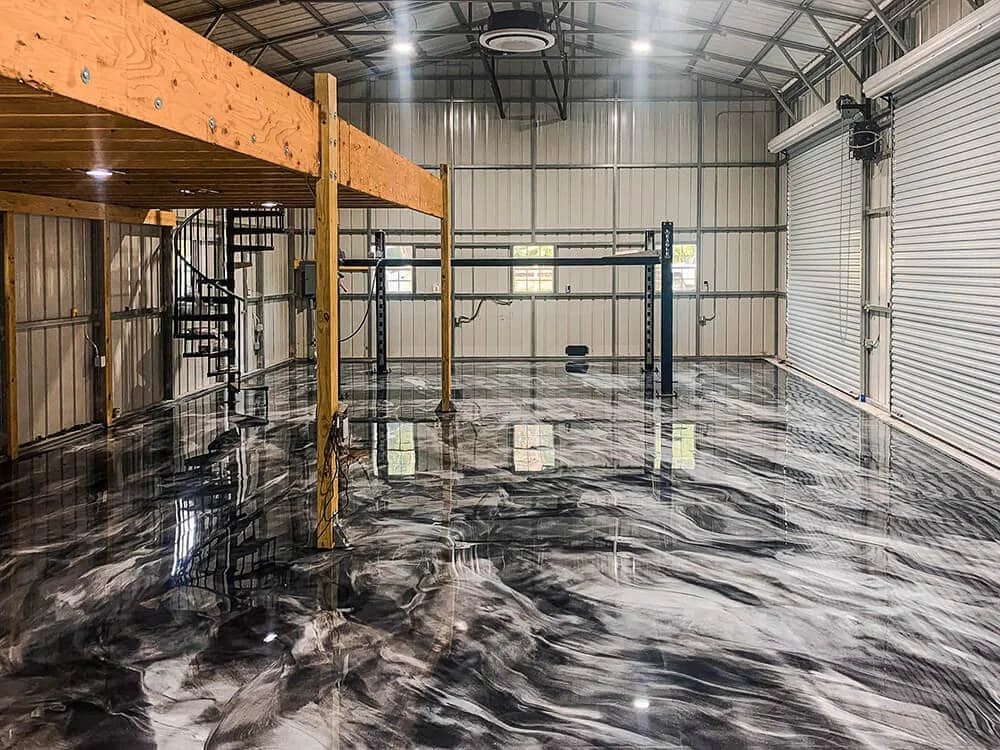
Southwestern Ontario’s climate presents specific challenges for industrial flooring that property owners and contractors must address during both installation and ongoing maintenance. The region experiences significant seasonal variation, with winter temperatures regularly dropping to -20°C and summer heat reaching +30°C. This 50-degree temperature swing causes expansion and contraction in concrete substrates that flooring systems must accommodate.
Freeze-thaw cycles are particularly destructive to improperly prepared concrete and inadequate coating systems. Water infiltration during fall or early winter can freeze within the concrete matrix, causing spalling, cracking, and delamination of surface coatings. Quality surface preparation and appropriate coating selection are essential to prevent these failures.
Road salt presents another regional challenge. Loading docks and entrance areas exposed to winter operations accumulate salt tracked in by trucks and equipment. Standard coating systems can break down rapidly under salt exposure, creating both aesthetic problems and structural deterioration. Salt-resistant sealers and reinforced systems in high-exposure areas protect the investment and maintain appearance.
Humidity variations affect concrete curing, coating application, and long-term performance. Summer humidity creates challenges for coating adhesion if moisture isn’t properly managed during installation. Winter heating creates extremely dry conditions that can cause coating brittleness if formulations aren’t selected for low-temperature flexibility.
Successful industrial flooring in Cambridge, Kitchener, and Waterloo starts with proper concrete preparation. Moisture testing is mandatory before any coating installation—concrete moisture content must be below 12% for wood-based products and meet calcium chloride test standards of ≤3 lbs/1000 sq ft for coatings and sealers.
Vapor barriers installed during original construction prevent groundwater moisture from wicking through concrete slabs. Many older industrial buildings lack these barriers, requiring moisture-mitigating primers or topical barriers before coating installation. Skipping this step virtually guarantees coating failure within 2-3 years as moisture pressure delaminates the coating from below.
Crack isolation systems address the inevitable movement in concrete substrates. Ontario’s freeze-thaw cycles and seasonal temperature variations cause even properly installed concrete to develop minor cracks. Isolation membranes installed between the substrate and finish coating prevent these substrate cracks from telegraphing through to the visible surface, maintaining appearance and preventing coating failure at crack locations.
Expansion joints must be properly designed and maintained to accommodate seasonal dimensional changes in concrete. Joints that are too narrow, improperly filled, or neglected become failure points where coatings crack and peel. Modern joint sealant materials specifically formulated for industrial environments accommodate movement while maintaining seal integrity.
Loading docks and entrance areas experience exponentially higher wear than general warehouse floors. These transition zones see concentrated truck traffic, frequent forklift movement, exposure to weather, and the destructive effects of road salt and chemicals tracked in from outside.
These high-wear areas justify reinforced flooring systems even when the general warehouse area uses more economical options. A typical approach involves installing heavy-duty epoxy or polyurethane systems in a 20-30 foot zone from each dock door, with salt-resistant sealers applied annually to maintain protection.
Drainage is critical in loading dock areas. Melting snow and ice creates standing water that accelerates concrete deterioration and creates safety hazards. Properly designed floor slopes and drainage systems channel water away from facility interiors while preventing accumulation in dock areas. Some facilities incorporate heated floors in critical zones to prevent ice formation entirely, though this adds operational cost.
Strategic floor mat placement at entrances removes the majority of tracked-in salt and debris before it spreads throughout the facility. Heavy-duty entrance matting systems pay for themselves many times over by reducing cleaning costs and protecting the main floor system from accelerated wear.
Successful industrial floor management in Southwestern Ontario requires a seasonal maintenance cadence that addresses climate-specific challenges:
Spring (April-May): Conduct comprehensive inspections after winter. Look for any damage caused by freeze-thaw cycles, salt exposure, or heavy winter operations. Address crack sealing, repair minor damage, and reseal high-exposure areas before summer heat makes certain repairs impractical.
Summer (June-August): Schedule major coating projects. Optimal temperature and humidity conditions allow proper curing and achieve maximum system performance. This is the ideal window for large-scale resurfacing, recoating, or new installations. Plan projects during slower operational periods when facility access is less disruptive.
Fall (September-October): Prepare floors for winter stress. Complete any remaining crack sealing, apply protective sealers in vulnerable areas, and ensure drainage systems are clear and functional before freeze-up. This is also the time to review snow removal procedures with facility operators to minimize salt use inside the building.
Winter (November-March): Monitor high-traffic areas for salt damage and address ice prevention. Conduct mid-winter inspections to identify developing issues before they become major problems. Document any damage for spring remediation planning. Minimize coating repair work during this period as cold temperatures compromise curing and performance.
First impressions form within seconds of entering a warehouse, and flooring plays an outsized role in that initial assessment. Prospective tenants—particularly those relocating from premium facilities in Greater Toronto—evaluate floor condition as an indicator of overall property management quality.
A clean, well-maintained floor signals professionalism and attention to detail. Conversely, cracked, stained, or patched concrete raises immediate questions about what other maintenance has been deferred. Tenants understand that floor problems rarely exist in isolation—if the most visible infrastructure element is neglected, what invisible systems might be compromised?
Evidence of proper maintenance matters as much as current condition. Tenants and their advisors often ask to see maintenance records, recent floor service invoices, and planned capital improvements. This documentation demonstrates proactive management and helps tenants forecast their occupancy costs accurately.
Safety features receive careful scrutiny during tours. Slip-resistance in appropriate areas, clear traffic lane markings, properly maintained expansion joints, and absence of trip hazards all factor into tenant evaluation. Companies with strong safety cultures—particularly those in manufacturing or food processing sectors—may eliminate properties with questionable floor safety from consideration regardless of other positive attributes.
Operational suitability is assessed through specific questions: When was the floor last serviced? What’s the load-bearing capacity in key areas? Are there drainage systems for wash-down operations if needed? What’s included in CAM (common area maintenance) charges related to floor maintenance? Landlords who can answer these questions confidently and provide documentation inspire tenant confidence.
The competitive dynamics of leasing industrial space often come down to subtle differentiators between otherwise similar properties. Consider two 60,000 square foot warehouses in Cambridge, both asking $13.50 per square foot with comparable ceiling heights, loading docks, and access.
Property A has the original concrete floor from 1995—worn, patched in multiple areas, dusty, and showing its age. The landlord has done minimal maintenance beyond addressing major cracks when absolutely necessary. The property is functional but uninspiring.
Property B’s owner invested $240,000 eighteen months ago in polished concrete throughout the main warehouse area with epoxy coating in the loading dock zones. The facility looks modern, clean, and well-maintained. Natural light reflects off the polished surface, making the space feel larger and brighter.
Property B leased within 45 days to a logistics company signing a 7-year term. The tenant specifically cited floor quality as a deciding factor—their operations require a dust-free environment, and the polished concrete delivered that without ongoing maintenance burden on the tenant’s side.
Property A sat vacant for 6 months. When it finally leased, the landlord had to drop the rate to $12.50 per square foot and agreed to a 3-year term. The shorter lease reflects tenant hesitation about long-term commitment to a property showing obvious deferred maintenance. Over the initial three-year period, Property A’s owner lost approximately $180,000 in rental income compared to Property B—more than enough to have paid for the flooring upgrade with substantial return remaining.
This scenario plays out repeatedly in competitive industrial markets. Properties that “look the part” lease faster, to better tenants, at higher rates, for longer terms. Flooring is one of the most visible and impactful factors in creating that positive impression.
Industrial property marketing materials often undersell flooring features through vague descriptions that fail to communicate value. Generic phrases like “concrete floors” or “good condition” provide no useful information to prospective tenants and miss opportunities to differentiate the property.
Effective marketing language quantifies features and communicates specific operational benefits:
Instead of: “Concrete floors”
Say: “200,000 PSI polished concrete with anti-dusting treatment throughout 55,000 sq ft warehouse area, suitable for heavy forklift operations and dust-sensitive inventory”
Instead of: “Recently updated”
Say: “2023 epoxy coating installation with chemical-resistant formulation meeting food-grade facility standards—recent inspection report available”
Instead of: “Good condition”
Say: “Professional maintenance program with documented service history—floor system has 15+ years remaining useful life with minimal tenant maintenance required”
These specific descriptions accomplish multiple objectives: they demonstrate property management sophistication, they help qualified tenants self-select by identifying facilities meeting their needs, and they justify premium pricing through quantified value delivery.
Photography matters enormously in industrial property marketing. Professional photography that captures clean, well-maintained floors creates immediate positive impression and generates higher inquiry rates. Many properties lease before prospective tenants ever visit in person—the listing photos make or break that initial interest.
Acquiring a new tenant costs significantly more than retaining an existing one, yet many landlords focus primarily on the leasing process while neglecting tenant relationship maintenance. Floor condition and maintenance responsiveness factor heavily into tenant satisfaction and lease renewal decisions.
Annual floor inspections as part of landlord service demonstrate commitment to property maintenance and catch minor issues before they become major tenant complaints. Providing tenants with an inspection report and maintenance schedule creates transparency and shows the landlord takes infrastructure seriously.
Scheduled maintenance prevents emergency repairs that disrupt tenant operations. A planned resealing project scheduled during the tenant’s annual shutdown period is vastly preferable to emergency coating repairs during peak operations after floor failure occurs. Tenants appreciate landlords who plan ahead and coordinate around operational needs.
Quick response to floor damage complaints builds goodwill and prevents small problems from escalating. A tenant reporting a damaged expansion joint or coating chip receives same-day acknowledgment and repair scheduling within 72 hours in well-managed properties. This responsiveness tells tenants their concerns matter and builds loyalty that translates to lease renewals.
Capital improvement plans shared with long-term tenants demonstrate the landlord’s commitment to the property’s future. When tenants see planned investments in infrastructure, they feel confident the facility will continue meeting their needs throughout their lease term and beyond—making lease renewal discussions much easier.
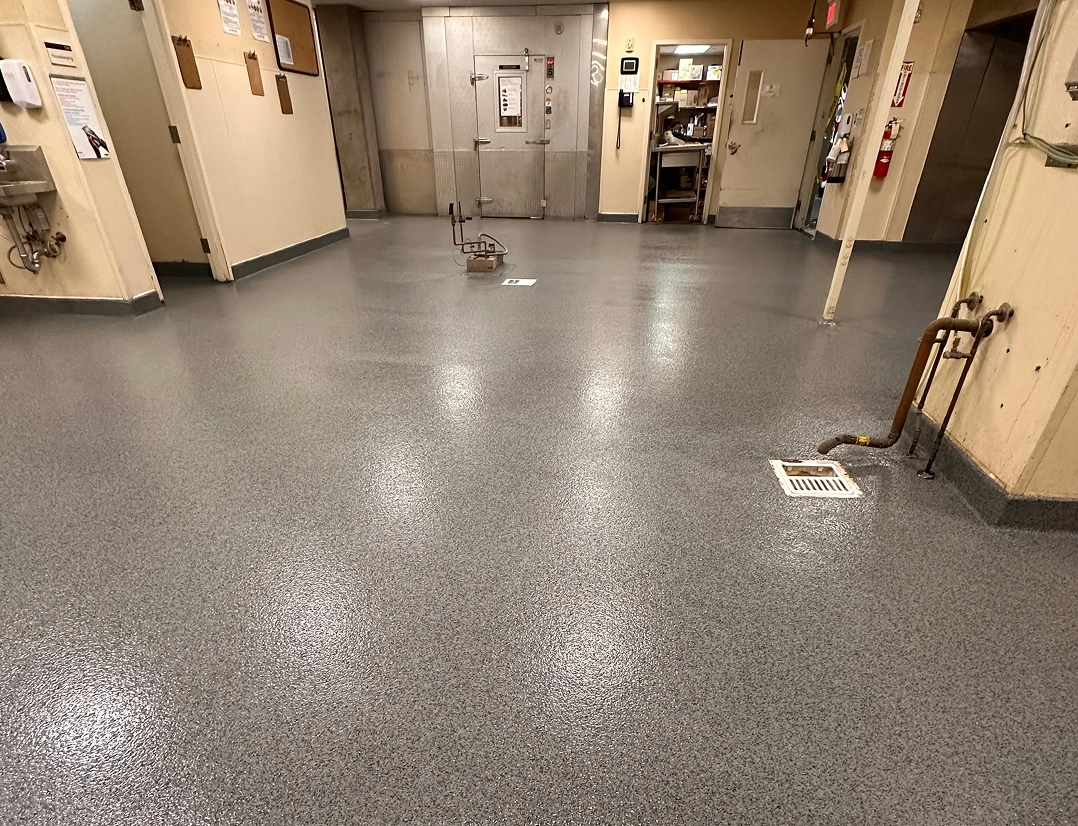
Industrial flooring evaluation requires looking beyond initial installation costs to total cost of ownership across the expected lifecycle. Different systems present dramatically different maintenance requirements, replacement schedules, and operating costs over 10-20 year timeframes.
A properly installed polished concrete system may cost $5 per square foot initially but require minimal maintenance beyond routine cleaning for 15-20 years. An epoxy system might cost $6 per square foot but need recoating every 7 years at $3 per square foot. Over 20 years, the total cost of ownership can vary by 50-100% between systems despite similar initial pricing.
Budget planning should establish maintenance reserves from day one. Setting aside $0.25-0.50 per square foot annually for floor maintenance reserve ensures funds are available when needed without impacting cash flow. For a 50,000 square foot facility, this means reserving $12,500-25,000 annually—modest compared to potential emergency repair costs if maintenance is neglected.
This reserve approach prevents the common scenario where needed floor maintenance is deferred because capital isn’t readily available, leading to accelerated deterioration and eventually requiring more expensive emergency repairs or full replacement rather than proactive maintenance.
The economic difference between preventative and reactive approaches to industrial floor maintenance is substantial and easily quantified.
A preventative maintenance approach includes annual inspections costing $2,000-5,000 for a typical 50,000 square foot facility. Minor resealing work every 3-5 years runs $10,000-20,000. This proactive investment maintains floor appearance and function, prevents minor issues from becoming major problems, and extends the overall system life by years or decades.
The reactive approach—addressing problems only when they become critical—appears cheaper initially but proves vastly more expensive over time. Emergency repairs during tenant occupancy disrupt operations and generate tenant relations problems. Accelerated deterioration from neglected maintenance forces complete floor replacement years earlier than necessary. The compounding costs of reactive maintenance often exceed proactive maintenance costs by 3-5 times.
Tenant complaints and potential lease disputes create additional hidden costs in reactive scenarios. A tenant dealing with persistent floor problems may use those issues as leverage in lease renewal negotiations, pushing for reduced rent or refusing to extend the lease entirely. The lost revenue from even one avoided lease renewal exceeds years of proactive maintenance budgets.
Documentation of maintenance activities provides protection in liability situations. If a slip-and-fall injury occurs, documented proof of regular maintenance and safety inspections demonstrates reasonable care. Without that documentation, landlords face greater liability exposure and higher insurance costs.
Determining whether floor issues require resurfacing or full replacement is critical to optimizing capital allocation. Resurfacing costs 30-50% of new installation, making it attractive when feasible—but inappropriate resurfacing attempts on floors requiring replacement waste money and cause problems.
Resurfacing is appropriate when surface wear occurs without structural substrate damage. Aesthetic issues like discoloration, minor staining, or surface coating wear can be addressed through resurfacing while maintaining the structural integrity of the base concrete. This approach makes sense for facilities preparing for leasing where appearance matters but structural issues don’t exist.
Full replacement becomes necessary when substrate failure occurs. Cracking, spalling (concrete surface breaking apart), or delamination (coating separating from concrete) indicate structural problems that resurfacing cannot address. Attempting to coat over failing concrete produces short-lived results and wastes the coating investment.
Moisture intrusion issues require investigating and addressing the underlying cause before any flooring work. If groundwater wicking or plumbing leaks are compromising the concrete, new flooring will fail just as the old flooring did. Proper diagnosis before committing to resurfacing versus replacement prevents repeat failures.
Load capacity changes also drive replacement decisions. A warehouse being converted from light distribution use to heavy manufacturing may require concrete reinforcement or replacement to handle increased loads. Similarly, converting to cold storage operations requires different concrete specifications to handle thermal stress.
Owners with multiple industrial properties benefit from strategic capital planning that optimizes both cost and timing of floor improvements across the portfolio.
Staggering major flooring projects across the portfolio prevents excessive capital outlays in any single year while ensuring each property receives attention on an appropriate schedule. A five-property portfolio might plan one major floor project per year on a rotating basis, maintaining consistent capital budgets while systematically upgrading the portfolio.
Bulk pricing negotiations with contractors deliver cost savings when multiple projects are committed. A contractor knowing they have three guaranteed projects over 18 months offers better pricing than bidding each project individually. These savings can reach 10-15% of project costs—significant at scale.
Coordinating floor work with lease expiration schedules minimizes disruption and maximizes value capture. Conducting major floor improvements during the period between tenant moveout and new tenant improvements allows time for proper installation without operational disruption. The improved floor then serves as a marketing asset during the leasing period and commands premium rent from the new tenant.
Industrial flooring requires specialized expertise that residential or small commercial contractors often lack. Property owners should verify contractors meet specific qualifications before entrusting them with large-scale projects.
Experience with large-format projects is essential. A contractor comfortable with 5,000 square foot retail installations may struggle with the logistics, equipment requirements, and coordination challenges of a 50,000 square foot warehouse project. Request references from projects of comparable scale and complexity.
Understanding industrial operations separates qualified contractors from those merely capable of applying coatings. The best contractors comprehend how forklift traffic patterns affect floor wear, how to phase work in occupied facilities to minimize operational disruption, and how different industrial processes create specific flooring requirements.
References from commercial property owners—not just general contractors or tenants—provide the most relevant information. Property owners evaluate contractor performance through the lens of long-term asset management, not just project completion. They can speak to warranty performance, responsiveness to issues, and whether the installed system delivered promised lifecycle performance.
Proper insurance and bonding for commercial work is non-negotiable. Verify general liability insurance of at least $5 million, workers compensation coverage, and appropriate bonding if project size warrants it. Request certificates of insurance naming the property owner as additional insured.
Knowledge of local building codes and industrial standards prevents costly compliance issues. Contractors unfamiliar with Ontario Building Code requirements, WSIB regulations, or industry-specific standards may install systems that pass visual inspection but fail regulatory review during tenant improvements or property transactions.
Timing flooring work to minimize disruption while achieving optimal installation conditions requires careful planning and communication.
The ideal scenario involves performing flooring work between tenant moveout and new tenant improvements. This provides maximum installation flexibility, eliminates operational disruption concerns, and ensures the floor is fresh and impressive when prospective tenants tour the property. When possible, plan major floor work during these vacancy periods.
Occupied facility work requires more sophisticated planning but is often necessary to maintain cash flow and tenant relationships. Phased approaches allow portions of the warehouse to remain operational while work proceeds in other areas. Fast-cure systems like MMA enable areas to return to service within 24 hours, minimizing the operational impact.
Night and weekend work schedules accommodate tenants who cannot shut down operations during business hours. This approach adds labor costs but preserves tenant productivity and demonstrates landlord commitment to minimizing disruption. Many industrial tenants gladly accept minor schedule inconvenience when they see the landlord investing in property improvements.
Tenant communication about planned floor work should begin 30-60 days in advance. Provide detailed schedules showing exactly when each area will be affected, what access restrictions will exist, and when areas return to normal use. This advance notice allows tenants to plan around the disruption and prevents the surprise and frustration that breeds complaints and lease termination discussions.
Choosing a Cambridge-based commercial flooring contractor provides specific advantages for industrial property owners in the Waterloo Region market.
Local contractors understand regional construction standards, building codes, and inspector expectations specific to Cambridge, Kitchener, and Waterloo jurisdictions. This familiarity prevents project delays and ensures installations meet local requirements without revision or costly corrections.
Established relationships with local building inspectors, permitting offices, and regulatory bodies streamline project approval processes. Contractors who regularly work in the region know which details inspectors scrutinize and can address potential issues proactively during planning rather than reactively during inspections.
Fast response for maintenance emergencies and warranty issues is realistic only with local contractors. A tenant reports floor damage on Monday morning—a Cambridge-based contractor can have someone on-site Monday afternoon to assess and schedule repairs. Contractors based in Toronto or other distant markets cannot provide this level of responsiveness.
Understanding climate-specific installation requirements comes from local experience. Contractors who regularly work in Southwestern Ontario understand how the region’s freeze-thaw cycles, temperature extremes, and humidity patterns affect flooring installation and performance. This knowledge prevents failures that occur when contractors from milder climates specify systems inappropriate for local conditions.
Competitive pricing reflects the absence of long-distance travel charges, hotel costs, and premiums contractors charge for working outside their primary service areas. Local contractors quote true project costs without padding for travel logistics or unfamiliarity with local conditions.
Industrial flooring installations must comply with Ontario Building Code requirements governing floor systems, load-bearing capacity, fire resistance, and accessibility.
Load-bearing capacity documentation is required for floor systems in industrial occupancies. The building code specifies minimum live loads based on use classification—warehouses, manufacturing facilities, and heavy industrial uses each have different requirements. Property owners must ensure floor systems meet or exceed these minimums and can provide documentation during inspections or tenant due diligence.
Fire resistance ratings apply to certain industrial occupancies based on building classification, occupant load, and the presence of specific hazards. While concrete floors inherently provide excellent fire resistance, certain coating systems can affect surface flame spread ratings and require specification of fire-resistant formulations.
Accessibility standards under the Accessibility for Ontarians with Disabilities Act (AODA) require attention to floor transitions, surface smoothness, and slip resistance in areas accessible to the public or employees. Industrial facilities open to visitors, office areas within warehouses, and break rooms must meet these standards to ensure regulatory compliance.
Beyond general building codes, certain industrial uses face sector-specific regulatory requirements affecting flooring specifications.
Food processing facilities fall under Canadian Food Inspection Agency (CFIA) jurisdiction. CFIA standards require seamless, non-porous flooring in areas where food is handled, processed, or stored. Coving (curved transitions between floor and wall) is mandatory in many areas to eliminate corners where bacteria can accumulate. Cleaning chemical resistance must be verified through testing to ensure floor systems withstand the sanitizing protocols required by food safety plans.
Pharmaceutical manufacturing and healthcare-related industrial uses must meet Good Manufacturing Practice (GMP) standards for cleanroom classifications, antimicrobial treatments, and electrostatic discharge control. These facilities require flooring systems engineered specifically for these applications, installed by contractors certified in cleanroom construction practices.
Automotive manufacturing and metalworking facilities navigate environmental protection regulations governing spill containment and secondary containment for chemicals and petroleum products. Floor systems in these areas must provide impermeable barriers preventing contaminants from reaching soil or groundwater.
Industrial flooring condition directly affects property insurance premiums and liability exposure in ways many landlords underestimate.
Slip-and-fall incidents represent the most common liability claim in industrial facilities. Proper floor maintenance, appropriate slip-resistance in wet areas, and documented inspection programs demonstrate reasonable care and provide defense against claims. Insurance companies often conduct site inspections assessing floor condition as part of underwriting commercial property policies.
Workers’ compensation premiums for tenant operations can be affected by facility safety features including flooring. While tenants bear direct responsibility for their workers’ compensation costs, landlords face liability for conditions under their control. Tenant injuries attributed to landlord negligence in floor maintenance create exposure beyond standard insurance coverage.
Documentation requirements for insurance compliance include maintenance logs, inspection reports, and service records demonstrating proactive floor care. Insurance adjusters investigating claims review these records to determine whether the landlord exercised reasonable care. Without documentation, insurers may deny coverage or tenants may have stronger positions in liability litigation.
Commercial real estate appraisers evaluate floor condition as part of overall property assessment, with direct impact on valuations and cap rates.
Condition assessment in appraisal reports assigns ratings to major building systems including flooring. Properties with excellent floor condition receive higher ratings that support stronger valuations. Conversely, deferred floor maintenance is documented as “deferred capital” that reduces property value by the estimated replacement cost plus a factor for disruption and lost income during repairs.
Cap rate impact from deferred maintenance can be substantial. A property showing obvious floor deterioration might be valued at a 7% cap rate while a comparable property with excellent condition commands a 6.5% cap rate. This 0.5% difference on a $5 million property equals $250,000 in valuation—far more than the cost of maintaining floors properly in the first place.
Comparable property analysis by appraisers explicitly accounts for condition differences. If every comparable industrial property in the Cambridge market has modern floor systems and the subject property has deteriorated original concrete, the appraiser adjusts value downward to reflect this deficiency.
Buyer due diligence increasingly involves engineering assessments that specifically evaluate floor condition. Sophisticated buyers or their lenders commission third-party inspections quantifying remaining useful life and replacement costs for major building systems. Unfavorable floor condition findings provide negotiating leverage for price reductions or repair credits.
Strategic property improvements in the 6-12 months before listing for sale can dramatically impact both sale price and time on market. Flooring investments rank among the highest-ROI pre-sale improvements for industrial properties.
The return on investment for pre-sale flooring improvements typically ranges from 150-250%. A $200,000 flooring upgrade often adds $300,000-500,000 to sale price through some combination of improved valuation, buyer perception, and reduced negotiation concessions. The improvement removes a buyer objection and positions the property as turnkey rather than requiring immediate capital investment.
Marketing advantages of quality flooring accelerate sale timelines and attract better buyers. Institutional investors and REITs seeking industrial properties for portfolio addition specifically target well-maintained assets that can be immediately added to the portfolio without deferred maintenance concerns. These buyers often pay premiums for acquisition certainty and immediate cash flow contribution.
Photography and property tours showcase improvements effectively, creating powerful first impressions that generate buyer interest. Industrial properties with impressive floor systems photograph dramatically better than deteriorated facilities, leading to higher inquiry rates and more competitive bidding situations.
Buyers evaluating industrial property acquisitions should make floor condition a central component of due diligence to avoid costly surprises post-closing.
Professional floor condition reports from qualified contractors provide objective assessment of existing systems, remaining useful life, and recommended maintenance or replacement timelines. These reports typically cost $2,000-5,000 but provide critical information for negotiation and capital planning.
Budget for necessary improvements in acquisition proforcing. If floor replacement or major resurfacing will be required during the hold period, accurate cost estimates ensure investment returns meet expectations. Underestimating these costs creates shortfalls in capital budgets and reduces returns.
Negotiate repairs or credits for deferred maintenance discovered during due diligence. Floor replacement costs estimated at $300,000 become reasonable basis for purchase price reduction or seller-provided credits to be held in escrow for completion of work post-closing.
Factor floor replacement timing into hold period ROI calculations. If floor work requires $400,000 investment in year three of a five-year hold, cash flow projections must account for both the capital outlay and any rent loss during the improvement period to accurately model investment returns.
Southwestern Ontario’s industrial real estate boom presents significant opportunity for property owners who understand that infrastructure investment drives competitive advantage in tight markets. With vacancy rates at 1.1% in Cambridge, Kitchener, Waterloo, Cambridge, and Guelph, demand is clearly present—but capturing that demand at premium rates with long-term tenancies requires differentiation beyond square footage and ceiling height.
Industrial flooring represents one of the highest-return investments landlords can make precisely because it impacts every aspect of property economics simultaneously. Tenant retention improves dramatically when operations run smoothly on quality floors. Rental rates command $1-2 per square foot premiums when properties present well and meet tenant operational needs. Operating costs decline through reduced maintenance and liability exposure. Property valuations increase as condition assessments reflect proactive asset management.
The mathematics supporting flooring investment are straightforward and compelling. At typical Southwestern Ontario industrial lease rates of $13-14.50 per square foot, a $3-8 per square foot flooring investment delivers measurable returns within 18-36 months and total returns of 200-400% over standard 10-year lease terms. These returns compare favorably with virtually any other capital improvement landlords can undertake.
Market dynamics will continue favoring well-maintained properties as tenant expectations rise alongside market maturation. Companies relocating from premium Greater Toronto facilities to capture cost savings in Southwestern Ontario still expect operational excellence—just at better prices. Properties that deliver that expectation through quality infrastructure, including superior flooring, will capture and retain the best tenants at the strongest rates.
The current tight vacancy environment creates an ideal window for strategic property improvements. Strong demand ensures improved properties lease quickly, and competition from purpose-built facilities makes it essential that older properties maintain competitive positioning through smart capital investment. Landlords who defer flooring maintenance to preserve short-term cash flow sacrifice long-term value creation and find themselves increasingly disadvantaged as the market evolves.
For property owners and investors in Cambridge, Kitchener, and Waterloo’s industrial market, the question isn’t whether to invest in quality flooring—it’s when to schedule the work and which system delivers optimal returns for specific property and tenant profiles. The numbers, market dynamics, and tenant expectations all point to the same conclusion: flooring infrastructure represents essential, high-return investment in competitive industrial real estate markets.
Planning industrial property improvements in Cambridge, Kitchener, or Waterloo?
Contact Club Ceramic Cambridge for a comprehensive flooring assessment and customized ROI analysis tailored to your property’s specific requirements and tenant profile.
Call: (647) 394-6030
Visit: clubceramiccambridge.ca
Serving: Cambridge, Kitchener, Waterloo, Guelph, and throughout Southwestern Ontario